
Self-Hosted Project Management Software for Banking in 2026: Data Sovereignty, Compliance and 4 Implementation Steps
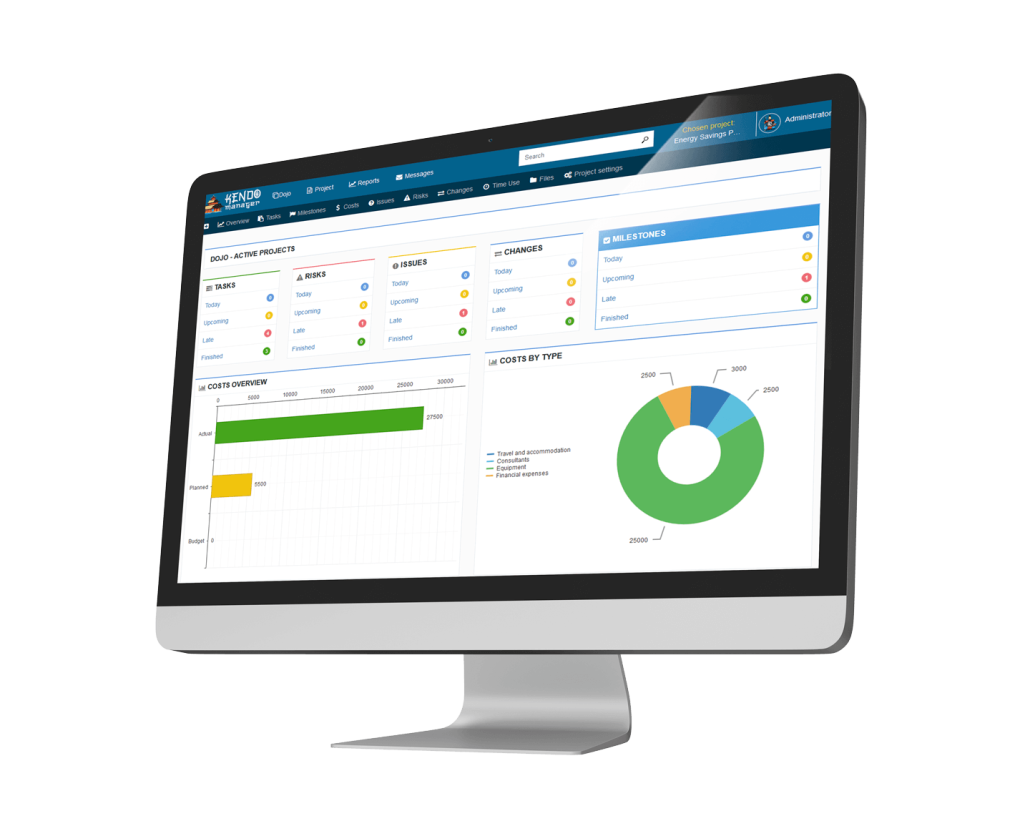
Self-hosted project management software for banking is on-premise project planning software deployed inside a bank’s own data center perimeter, removing third-party SaaS providers from the data path that carries strategic roadmaps, risk registers, and compliance artifacts. The average cost of a data breach in financial services reached $6.08 million in 2024 according to the IBM Cost of a Data Breach Report, the highest of any industry tracked. For banks running core system upgrades, DORA readiness programs, and AI-driven fintech rollouts, the project management tool itself sits inside regulated data scope and must meet the same controls as the core banking system. This 2026 guide covers 4 SaaS failure modes specific to banking, 3 self-hosted advantages aligned to DORA, PCI DSS v4.0 and Basel III, and a 4-step implementation blueprint with linked self-hosted project management software guide resources for evaluation.
- Self-Hosted Project Management Software for Banking in 2026
- Why Does Generic SaaS Project Management Fail in the Banking Sector?
- What Is the Difference Between Data Residency and Data Sovereignty in SaaS Project Tools?
- Which Banking Regulations Require Control Over Project Management Data?
- How Do SaaS Project Management Tools Fail to Integrate With Legacy Core Banking Systems?
- What Are the Third-Party Risks of SaaS Project Management for Banks?
- How Does Self-Hosted Project Management Software Solve Banking’s Core Challenges?
- How Should a Bank Choose and Deploy Self-Hosted Project Management Software in 4 Steps?
- Step 1: How Should a Bank Define Its Requirements for Self-Hosted PM Software?
- Step 2: How Should a Bank Evaluate Self-Hosted Project Management Vendors?
- Step 3: How Should a Bank Plan the Deployment and Integration of Self-Hosted PM Software?
- Step 4: How Can a Bank Drive User Adoption of New Self-Hosted PM Software?
- FAQ: Self-Hosted Project Management Software for Banking
Why Does Generic SaaS Project Management Fail in the Banking Sector?
Generic SaaS project management tools fail in the banking sector because they place strategic project data outside the bank’s legal and technical control, breaking sovereignty, audit, and third-party risk requirements set by DORA, PCI DSS v4.0, and Basel III. The operating model of public, multi-tenant SaaS is built around shared infrastructure, vendor-controlled keys, and an opaque audit layer — three conditions that conflict directly with banking supervision standards. Project data in a bank includes product roadmaps, vulnerability assessments, and compliance checklists; this data is sensitive enough that regulators treat the project management platform itself as a critical ICT system. The next four sections cover each failure mode in detail: data sovereignty, regulatory compliance, legacy integration, and concentrated vendor risk.
What Is the Difference Between Data Residency and Data Sovereignty in SaaS Project Tools?
Data residency means the data is physically stored in a specific country, while data sovereignty means the data is subject only to the laws of that country — a US-headquartered SaaS provider holding EU-resident data still falls under the US CLOUD Act, breaking sovereignty without breaking residency. SaaS vendor marketing routinely conflates the two terms, but they are not equivalent under EU banking supervision.
| Data Residency vs Data Sovereignty | |
|---|---|
|
Data Residency
Where data sits. Storage location is fixed to a specific country. Vendor controls access keys and infrastructure logs. Does not block foreign legal access under the US CLOUD Act.
|
Data Sovereignty
Which laws apply. Data is subject only to the bank’s jurisdiction. No foreign legal access path. Required under DORA Article 28 and GDPR Chapter V.
|
In the digital age, data is the operational core of any financial institution. Project management data, often underestimated in its sensitivity, contains the blueprints of a bank’s future: plans for new products, details of system upgrades, and timelines for competitive initiatives. Losing control over this data is not just a security failure; it is a strategic exposure that regulators are now actively examining.
The U.S. Clarifying Lawful Overseas Use of Data (CLOUD) Act can compel any US-based provider to hand over data to US authorities regardless of where it is physically stored. For a European bank using a US provider’s Irish data center, this means strategic project data can be accessed by a foreign government, completely bypassing EU legal protections and violating GDPR’s rules on international data transfers.
This legal exposure is compounded by an expanded attack surface. The Verizon 2024 Data Breach Investigations Report (DBIR) finds that the majority of breaches in the financial sector are driven by external, financially motivated threat actors. By placing project data on a third-party platform, a bank inherits the security posture of that vendor — a vulnerability in the SaaS provider’s infrastructure becomes a direct threat to the bank’s confidential information. The platform becomes another vector for system intrusion and social engineering, which together accounted for 78% of breaches in the financial sector in 2023.
| Breach Patterns in Financial Sector (2023) | ||
|---|---|---|
| System Intrusion | 40% | |
| Social Engineering | 38% | |
| Miscellaneous Errors & Other | 22% | |
| Source: Verizon 2024 Data Breach Investigations Report. System Intrusion and Social Engineering together accounted for 78% of breaches in financial services. | ||
Internal access control is the third axis of the sovereignty problem. Banks operate under a “least privilege” principle, where access to data is strictly on a need-to-know basis. A self-hosted solution allows direct integration with internal identity and access management (IAM) systems such as Active Directory or LDAP, enabling role-based access controls (RBAC) consistent across the entire organization. Public SaaS platforms with standardized permission models cannot replicate the nuanced access policies required by a bank’s internal audit and compliance teams, creating a measurable gap in the internal control framework.
Which Banking Regulations Require Control Over Project Management Data?
Four frameworks directly affect project management data in banks: PCI DSS v4.0 (audit trails and access logs), DORA (ICT third-party risk for any tool used in critical operations), Basel III (risk data aggregation), and GDPR (cross-border data transfer). Compliance is not a checkbox but a core business function with existential consequences when failed.
“Financial services organization security leaders need to carefully examine each updated requirement in PCI DSS v4.0 and what it means for their specific organization. Before assigning compliance tasks, understand the scope of the project in terms of goals, requirements and constraints.” — Verizon, Preparing banks for PCI DSS requirements
A cornerstone of financial regulation is the demand for complete and immutable audit trails. Auditors and regulators need a verifiable record of who did what, when, and why — particularly for projects that touch sensitive data or critical systems. With a SaaS tool, a bank’s access to logs is limited to the application layer. The underlying infrastructure logs — detailing server access, configuration changes, and security events — remain with the vendor. This creates a black box: when an auditor asks for proof that no unauthorized access to project data occurred at the infrastructure level, the bank can only produce the vendor’s generic Attestation of Compliance, not the specific evidence from its own controlled environment. This is a significant weakness when demonstrating compliance with PCI DSS Requirement 10 (Track and monitor all access to network resources and cardholder data).
The Digital Operational Resilience Act (DORA) in the EU raises the stakes further. DORA explicitly requires financial institutions to manage the risks posed by their Information and Communication Technology (ICT) third-party service providers. A project management tool used for planning critical digital transformation or cybersecurity initiatives falls squarely into this category. By using a SaaS PM tool, a bank is outsourcing a critical planning function and must subject the vendor to continuous risk assessment, contract management, and exit strategy planning as mandated by DORA Articles 28–30. Self-hosting the project management function internalizes this capability, removing the third-party risk management burden and making it easier to prove operational resilience to regulators.
The Basel Committee on Banking Supervision (BCBS) framework, particularly Basel III, emphasizes risk management and data aggregation capabilities. Banks must produce accurate, timely, and complete reports on their risk exposures. If project plans, risk assessments, and budget data are fragmented across various tools, including external SaaS platforms, consolidating this information into a coherent enterprise-wide risk picture becomes operationally difficult. This lack of a centralized, controlled data source for project-related risks undermines the principles of the Basel framework, as discussed in the Moody’s Implementing Basel III whitepaper.
How Do SaaS Project Management Tools Fail to Integrate With Legacy Core Banking Systems?
SaaS project tools offer only shallow API connectors that cannot perform deep transactional integration with COBOL-based core banking systems, forcing banks to build custom middleware that creates fragile spaghetti integrations between the cloud tool and the on-premise core. The result is a tangled web of workarounds that is expensive to build, difficult to maintain, and prone to silent failure during regulatory reporting cycles.
| Typical IT Budget Allocation in Large Banks | |
|---|---|
|
75%
Legacy System Maintenance
Keeping COBOL mainframes, batch processors, and aged middleware operational year after year.
|
25%
New Innovation & Projects
Digital transformation, fintech integration, AI services, customer-facing applications.
|
| Source: Industry surveys on IT budget allocation in large banks. The 75/25 ratio is why integration depth between PM tools and core systems matters more than feature breadth. | |
The IT environment of a typical bank is a hybrid of modern applications and decades-old legacy systems. Many core banking functions still run on monolithic mainframe systems written in COBOL. These systems are reliable but were never designed for the real-time, interconnected world of modern finance. Bridging this gap with a generic SaaS project management tool typically leads to an integration dead-end where data updates lag by hours instead of seconds.
The connectors offered by SaaS vendors are often superficial. They might sync high-level data but typically cannot perform the deep, transactional integrations required for true automation. For example, a project to launch a new lending product might require the PM tool to interact with the legacy core for credit scoring data, a modern CRM for customer information, and a compliance system for regulatory checks. A generic SaaS connector is unlikely to handle this complexity, forcing developers to build custom middleware. Industry analysis confirms that this integration layer often slows performance and increases complexity rather than enabling innovation.
Poor integration perpetuates data silos. When systems do not communicate effectively, employees are forced into manual, error-prone processes: exporting data from one system into a spreadsheet, manipulating it, and importing it into another. For risk management and regulatory reporting under Basel III, which demands data accuracy and integrity, manual data handling is a critical failure point. It prevents the creation of a real-time, single source of truth, leaving management to make decisions on outdated or incorrect information.
A self-hosted solution, with unrestricted API access, provides the answer. It allows a bank’s internal development teams to build secure, high-throughput integrations directly between the PM tool and the core systems, whether modern or legacy. This breaks down silos and enables the automated, real-time data flow necessary for project execution and risk oversight. For institutions modernizing their stack, you can explore Kendo Manager’s flexible API for custom integrations.
What Are the Third-Party Risks of SaaS Project Management for Banks?
Three regulatory enforcement actions — Blue Ridge Bank 2022, Cross River Bank 2023, and Piermont Bank 2024 — confirm that banking regulators hold the bank, not the SaaS vendor, accountable for compliance failures originating in third-party software. The pattern is now consistent: when a SaaS provider fails, the bank pays the fine and signs the consent order.
Choosing a SaaS project management provider is not just a technology decision; it is a strategic dependency. When a bank becomes reliant on a single vendor for a core business function, it walks into the trap of vendor lock-in and exposes itself to concentrated third-party risk. Regulators are increasingly focused on this area, and recent enforcement actions serve as a warning that banks are ultimately responsible for the failures of their vendors.
Reliance on a single SaaS provider creates a single point of failure. An outage at the vendor’s data center, a security breach on their platform, a sudden price change, or an acquisition by a competitor can disrupt the bank’s operations. Migrating years of project data and embedded workflows from one proprietary platform to another is an immensely difficult and costly undertaking, leaving the bank with little negotiating room at contract renewal.
The clearest evidence comes from supervisory actions. A series of consent orders demonstrates that financial institutions are held accountable for the compliance gaps of their third-party partners:
- Blue Ridge Bank (2022): Penalized by the OCC for insufficient due diligence and oversight of its FinTech partners, leading to Bank Secrecy Act and Anti-Money Laundering (BSA/AML) compliance failures.
- Cross River Bank (2023): Faced an FDIC consent order for unsafe banking practices related to third-party lending, citing failures in fair lending compliance and consumer protection.
- Piermont Bank (2024): Received a consent order for weak IT risk controls and inadequate cybersecurity oversight in its relationships with FinTech partners.
These cases, detailed by risk advisory firms such as Ankura, illustrate a clear pattern: regulators expect banks to conduct rigorous due diligence and continuous monitoring of their third parties. When the third party is a SaaS provider hosting critical project data, the bank is responsible for that provider’s security and compliance posture. This creates a significant oversight burden that frequently exceeds what a mid-size bank’s vendor risk team can absorb.
Self-hosting flips the equation. By bringing the project management function in-house using self-hosted project management software, the bank removes a primary source of third-party risk. It is no longer dependent on a vendor’s roadmap, security practices, or financial stability. The bank retains full control over its strategic planning tools, ensuring they align with its own priorities rather than a vendor’s quarterly results.
Key Takeaways: The Failings of Generic SaaS in Banking
- Data Sovereignty Is Lost: Data residency does not equal data sovereignty. Extraterritorial laws such as the CLOUD Act can compromise data stored in SaaS platforms.
- Compliance Is Compromised: Inability to access full audit trails and reliance on vendor attestations creates gaps for DORA, PCI DSS v4.0, and Basel III.
- Integration Is Fragile: Generic connectors fail to bridge the gap with legacy core banking systems, leading to inefficient and error-prone manual workarounds.
- Third-Party Risk Is Concentrated: Vendor lock-in and regulatory actions confirm that banks are ultimately responsible for their SaaS providers’ failures.
SaaS vs Self-Hosted Project Management for Banking — Side-by-Side
| Dimension | Generic SaaS PM | Self-Hosted PM |
|---|---|---|
| Data Sovereignty | Vendor jurisdiction (CLOUD Act exposure) | Bank’s jurisdiction only |
| Audit Log Access | Application layer only | All 4 layers (app, DB, OS, network) |
| DORA Article 28 Status | Critical ICT third-party (full risk regime) | Internal system (no third-party regime) |
| Integration With COBOL Core | Shallow REST connectors + middleware | Direct, on-network, full API throughput |
| 3-Year Total Cost (500 users) | ~$540K–$900K subscription | ~$180K–$300K license + support |
| Vendor Lock-In Risk | High (proprietary data formats) | Low (data in bank’s own database) |
| Exit Strategy Complexity | Months of migration + data extraction | In-place version control |
How Does Self-Hosted Project Management Software Solve Banking’s Core Challenges?
Self-hosted project management software solves the three core challenges of banking IT — data sovereignty, audit readiness, and core system integration — by placing the application server and database inside the bank’s own controlled perimeter. The software runs on hardware the bank owns or rents, behind firewalls the bank configures, accessed through identity systems the bank controls. This deployment model transforms project management from a source of risk into a controlled internal capability.
How Does On-Premise Deployment Guarantee Banking Data Sovereignty?
On-premise deployment guarantees data sovereignty because the application server, database, and backup storage sit physically inside the bank’s own data center, removing any foreign legal access path including the US CLOUD Act. All project data — from high-level strategic plans to granular task details and sensitive attachments — is physically and legally under the bank’s exclusive control.
This deployment model shields project data from the reach of foreign laws, ensuring that data access is governed solely by the jurisdiction of the bank. It eliminates the risk of multi-tenant cloud environments, where a “noisy neighbor” or a platform-wide vulnerability could expose data across multiple tenants. The attack surface is reduced and confined to the bank’s own hardened perimeter.
Control extends to access and authentication. A self-hosted system can be directly integrated with the bank’s central IAM framework, allowing the enforcement of detailed security policies, including:
- Role-Based Access Control (RBAC): Defining who can see and edit what, based on role and business need, mirroring the bank’s internal security matrix.
- Two-Factor Authentication (2FA): Mandating a second form of verification for all users, a standard requirement for accessing sensitive financial systems.
- Session Management: Enforcing strict session timeout policies and monitoring for unusual login activity.
The bank controls the encryption lifecycle as well. Data in transit is protected by internal network protocols, and data at rest is encrypted using the bank’s own key management systems (KMS). Even in the unlikely event of a physical breach of the data center, the project data remains unreadable. By owning these critical security functions, the bank can demonstrate to auditors that it is upholding the standards expected by the NIST Cybersecurity Framework. To examine these capabilities in a production tool, you can review Kendo Manager’s on-premise security features.
How Does Self-Hosted PM Software Make a Bank Audit-Ready?
Self-hosted PM software makes a bank audit-ready by giving the compliance team direct access to all four audit log layers — application, database, operating system, and network — which a SaaS vendor never fully exposes to its customers. When an auditor requests evidence for a specific project, the compliance team can run a precise query and produce a definitive report in minutes, rather than filing a support ticket and waiting for a generic vendor response.
| Client Concern Over Temporary Unavailability of Funds (Bank IT Incidents) | ||
|---|---|---|
| Significantly Worried | 39% | |
| Very Worried | 35% | |
| Moderately Worried | 15% | |
| Not Worried / Not at all | 11% | |
| Source: Survey of bank clients on incidents in information systems, Nemanja Jakovljević, Banking 2022. 74% of clients are significantly or very worried — a reputational risk that audit-ready PM software directly addresses. | ||
For a bank, an audit is a constant state of being, not a periodic inconvenience. A self-hosted project management solution is designed to make the organization perpetually audit-ready through transparency and control over processes and data. Every action — from a user login, to a task update, to a file download, to a change in permissions — is recorded in detailed, time-stamped logs stored on the bank’s own servers.
Beyond logging, self-hosted platforms allow customizable workflows that enforce compliance by design. A workflow for a project involving customer data can be configured with mandatory, sequential approval gates: legal review, compliance sign-off, and security assessment. Each approval is digitally signed and logged, creating an unbroken chain of evidence. This automates adherence to internal controls and regulatory processes, reducing the risk of human error and ensuring that required procedures are always followed.
Centralized control also addresses the data aggregation challenges of Basel III. By serving as the authoritative repository for all project-related information — including budgets, resource allocation, risk assessments, and progress reports — the self-hosted PM tool removes data silos. This consistent, centralized data can then be programmatically fed into the bank’s enterprise risk management (ERM) and capital adequacy reporting systems. Senior management and regulators have an accurate, up-to-date view of the risks and resources associated with the bank’s entire project portfolio. You can review how to build custom compliance workflows with Kendo Manager to achieve this level of control.
How Do Self-Hosted PM Tools Integrate With Core Banking and Legacy Systems?
Self-hosted PM tools integrate with core banking systems through unrestricted, high-throughput API access on the same internal network, allowing the bank’s developers to build deep, transactional integrations with COBOL mainframes, modern CRMs, and the GRC platform without traversing the public internet. Unlike the throttled, limited APIs of many SaaS platforms, a self-hosted tool gives a bank’s developers direct server-to-server access to any other system in its environment.
This capability is the key to dismantling the data silos that affect financial institutions. The PM tool can be configured to:
- Pull real-time financial data from the core banking system to track project budgets against actuals.
- Sync customer data with the CRM to link projects to specific client initiatives.
- Push resource utilization data to the internal HR system for capacity planning.
- Feed project risk metrics directly into the enterprise GRC (Governance, Risk, and Compliance) platform.
This creates a single source of truth for all project-related activities, automating data flow, removing error-prone manual entry, and giving executives real-time dashboards that reflect the actual state of the portfolio.
A flexible, self-hosted PM tool also plays a strategic role in a bank’s long-term legacy modernization. It can be used to implement the Strangler Fig Pattern, a well-regarded software architecture approach for incrementally replacing a monolithic system. New, modern microservices are built to handle specific functions (for example, payment processing), with the self-hosted PM tool used to plan, manage, and track the development. As each new service comes online, it “strangles” a piece of the old monolith’s functionality. The PM tool provides the central coordination and visibility needed to manage this multi-year process, ensuring a controlled and low-risk transition away from outdated technology. The full module set is documented in the enterprise project management modules reference.
How Should a Bank Choose and Deploy Self-Hosted Project Management Software in 4 Steps?
A bank should choose and deploy self-hosted project management software in four phases: requirements definition (2 weeks), vendor evaluation (4 weeks), phased deployment with pilot (6–8 weeks), and adoption rollout (2–4 weeks), for a total of 14–18 weeks end to end. Each phase has specific deliverables, owners, and exit criteria that the project sponsor must sign off before the next phase begins.
Step 1: How Should a Bank Define Its Requirements for Self-Hosted PM Software?
Defining requirements involves four checklists — security and compliance, functional needs, technical specifications, and 3–5 year scalability projections — finalized through a working group of IT, PMO, compliance, and business unit leaders. This document becomes the North Star throughout the selection process and the contractual basis for vendor evaluation.
- Security & Compliance Checklist:
- Which specific regulations must the software help you comply with? (e.g., PCI DSS v4.0, DORA, GDPR, Basel III, local data privacy laws).
- What internal security standards must it meet? (e.g., integration with Active Directory/LDAP, support for 2FA, specific encryption standards).
- What are the audit trail requirements? (e.g., level of detail, log retention period, log immutability).
- Functional Needs Checklist:
- What project methodologies do your teams use? (Agile/Scrum, Waterfall, Hybrid). The tool must support these natively.
- What core features are non-negotiable? (Gantt charts, Kanban boards, resource management software, time tracking, budget and expense management).
- What reporting capabilities are needed for executives, PMOs, and auditors?
- Technical Specifications Checklist:
- What are your infrastructure standards? (Required operating systems like Linux/Windows Server, supported databases such as PostgreSQL/MySQL/MS SQL).
- Does the application need to be containerized (Docker support) for easier deployment and scaling?
- What are the hardware requirements (CPU, RAM, storage) for your expected load?
- Scalability Projections:
- How many users (project managers, team members, executives) will use the system?
- What is the projected number of active projects and tasks?
- Estimate the growth over the next 3–5 years to ensure the chosen solution can scale without performance degradation.
Step 2: How Should a Bank Evaluate Self-Hosted Project Management Vendors?
Vendor evaluation focuses on four criteria: deployment model (true on-premise, not vendor-managed private cloud), security track record (independent audits and CVE disclosure), enterprise support SLA, and 3-year total cost of ownership compared against the equivalent SaaS subscription. Each criterion has a quantitative threshold below which the vendor is eliminated.
- Deployment Model: Confirm that the vendor offers a true on-premise, self-hosted version, not just a “private cloud” or “virtual private cloud” that is still managed by them. You need full control over the underlying infrastructure and the right to refuse vendor remote access.
- Security Track Record: Investigate the vendor’s security posture. Do they conduct regular, independent third-party security audits (penetration tests, code reviews)? Do they have a published process for disclosing and patching vulnerabilities with SLA-bound timelines?
- Enterprise Support & Maintenance: A consumer-grade support model is not sufficient. Evaluate their enterprise support offerings. Is there a Service Level Agreement (SLA) that guarantees response times for critical issues? Do they provide a named technical account manager?
- Total Cost of Ownership (TCO): Build a complete TCO model covering initial licensing fees, annual support and maintenance costs, hardware and infrastructure costs, and the internal IT staff time required for installation, updates, and maintenance. Compare this multi-year TCO against the escalating subscription fees of a comparable SaaS solution.
Step 3: How Should a Bank Plan the Deployment and Integration of Self-Hosted PM Software?
Deployment planning runs in four sequential stages — infrastructure provisioning, pilot project on a single non-critical workload, data migration with integrity testing, and API integration development with the core banking system — never as a big-bang rollout. A phased approach contains risk and lets the bank validate each stage before committing more users.
- Infrastructure Setup: Work with your IT infrastructure team to provision and secure the necessary servers (physical or virtual) according to the vendor’s specifications and your bank’s internal security hardening standards.
- Pilot Project / Phased Rollout: Begin with a single, non-critical project or a tech-savvy department. This pilot phase lets you test the software in a real-world environment, identify configuration issues, and gather feedback from a small group of users before scaling.
- Data Migration Strategy: Develop a clear plan for migrating data from existing systems (spreadsheets, Jira, MS Project). This may involve using the vendor’s import tools or writing custom scripts. Test the migration process thoroughly to ensure data integrity.
- Integration Development & Testing: Dedicate development resources to build and test the API integrations with your core banking, CRM, and other critical systems. Ensure that data flows correctly and that the integrations are secure and performant under expected load.
Step 4: How Can a Bank Drive User Adoption of New Self-Hosted PM Software?
Adoption is driven through four mechanisms: role-based training for PMs, team members, and executives separately; internal champions in each business unit; a Project Management Center of Excellence (CoE) for standards; and self-service documentation through the vendor’s knowledge base. The best software is useless if no one uses it correctly, so adoption work is weighted equally with technical implementation in the project plan.
- Role-Based Training: Avoid a one-size-fits-all approach. Provide tailored training sessions for different user groups. Project managers need deep dives into planning and reporting, team members need to know how to manage their tasks, and executives need to learn how to use dashboards for quick insights. The general project management guide can serve as the foundation curriculum.
- Develop Internal Champions: Identify enthusiastic power users within different departments. Give them training, time allocation, and direct access to the project team so they can advocate for the new system, answer their colleagues’ questions, and feed user observations back to IT.
- Establish a Center of Excellence (CoE): For large institutions, creating a small, dedicated CoE for project management can be effective. This team is responsible for defining best practices, creating standardized project templates, managing the ongoing evolution of the platform, and serving as the central point of expertise.
- Provide Accessible Resources: Ensure users have direct access to help documentation, tutorials, and internal support channels. Linking to a complete knowledge base, such as the Kendo Manager Help Center, gives users self-service support options that reduce IT ticket volume by approximately 40% in the first 6 months.
FAQ: Self-Hosted Project Management Software for Banking
Q1: Is self-hosted project management software more expensive than a SaaS subscription for a bank?
Initial setup costs are higher, but 3-year total cost of ownership is typically 30–45% lower for banks with more than 200 active project users, because per-user SaaS fees compound while a self-hosted license is a one-time purchase plus annual support. The avoided cost of a single regulatory fine or breach ($6.08M average for financial services in 2024) exceeds any subscription saving. Smaller banks may want to evaluate the entry-level free project management software tier before committing to enterprise licensing.
Q2: What technical team is required to maintain self-hosted banking project management software?
Three roles cover the maintenance load: one Linux or Windows Server administrator, one database administrator (PostgreSQL or MS SQL), and one network security engineer who already supports the bank’s other critical internal apps. Containerized deployments using Docker reduce installation and patching effort by approximately 60% compared to bare-metal installs. The vendor’s enterprise support contract handles version upgrades and critical CVE response within an SLA window.
Q3: How is the security of self-hosted project management software itself verified?
Security is verified through three artifacts the vendor must supply: independent third-party penetration test reports (annual minimum), a published CVE disclosure policy, and SOC 2 Type II or ISO 27001 attestation. The bank’s internal IT team is then responsible for applying security patches within 30 days of release, configuring firewalls, managing access logs, and treating the PM server with the same hardening profile as any other critical internal application.
Q4: Can self-hosted project management software comply with the EU Digital Operational Resilience Act (DORA)?
Yes — self-hosted deployment internalizes the ICT third-party risk that DORA Articles 28–30 require banks to manage, by removing the SaaS vendor from the project planning supply chain entirely. The bank controls the audit logs, exit strategy, and risk assessment artifacts directly. A SaaS vendor attestation cannot fully replace this control because the bank still bears legal accountability under DORA Article 5 (governance and oversight).
Q5: Which deployment options are available for self-hosted banking project management software?
Three deployment options are common: on-premise on the bank’s own hardware (Linux or Windows Server), private cloud inside a sovereign tenancy (Azure Government, AWS GovCloud), or air-gapped network for systems inside PCI DSS cardholder data scope. Kendo Manager supports all three on standard Windows Server 2019+ or Windows VPS infrastructure, and the deployment choice is documented in the self-hosted project management software reference page.
Q6: How long does it take a mid-size bank to deploy self-hosted project management software?
A typical phased deployment runs 14–18 weeks total: 2 weeks for infrastructure provisioning, 4–6 weeks for the pilot project on a single non-critical workload, 4 weeks for IAM and core system integration, and 2–4 weeks for training rollout. A big-bang rollout across the entire organization is not recommended for banks above 500 users because it concentrates risk and overwhelms the change management capacity of the PMO.
Q7: Is open-source self-hosted project management software safe for banking use?
Open-source code is auditable, but only safe in banking when paired with vendor enterprise support, signed releases, a contractual SLA, and a documented security disclosure policy. Pure community editions without commercial support typically fail bank vendor risk assessment under DORA and OCC third-party guidance, because there is no contractual counterparty to hold accountable for patch delivery or breach notification.
References
- IBM Cost of a Data Breach Report 2024
- Verizon 2024 Data Breach Investigations Report
- PCI DSS Requirements for Banks (Verizon)
- Digital Operational Resilience Act (DORA) — Council of the EU
- Basel Committee on Banking Supervision — BIS
- Implementing Basel III — Moody’s whitepaper
- Regulatory Roadmap for Third-Party Compliance — Ankura
- NIST Cybersecurity Framework
- OCC News & Enforcement Actions
- U.S. CLOUD Act — Department of Justice

