
Data Sovereignty and Compliance: Why On-Premise Project Management is Essential for Construction Firms
The Construction Industry’s Unique Data Risk Profile
Construction projects are characterized by their longevity, high financial value, and the involvement of numerous third parties (subcontractors, architects, engineers). This creates a unique data risk profile:
- High-Value Intellectual Property: Blueprints, BIM models, and proprietary construction methods are valuable trade secrets.
- Regulatory Compliance: Projects often involve government contracts or operate across multiple jurisdictions, each with its own data protection laws.
- Sensitive Personal Data: Managing large workforces requires handling sensitive employee and subcontractor personal data, which falls under regulations like GDPR.
In this environment, relying on third-party cloud providers introduces risks related to data location and jurisdiction that can be difficult to mitigate.
Understanding Data Sovereignty and Data Residency
To understand the necessity of on-premise project management, one must distinguish between two key concepts:
| Concept | Definition | Implication for Construction |
|---|---|---|
| Data Residency | The physical location where data is stored and processed. | A cloud provider might store data in a country with less stringent privacy laws, even if the construction firm is based elsewhere. |
| Data Sovereignty | The legal jurisdiction and control over data, meaning the data is subject to the laws of the nation where it is collected or stored. | Cloud providers operating under foreign laws (e.g., the U.S. CLOUD Act) may be compelled to hand over data, regardless of where it is physically stored. |
On-premise project management eliminates this ambiguity. By hosting the software and data on their own servers, construction firms ensure that their data remains within their physical and legal control, directly addressing the challenge of data sovereignty.
Compliance Imperatives: GDPR and Beyond
For any construction firm operating in or with the European Union, GDPR compliance is non-negotiable.
GDPR mandates strict rules for the processing and storage of personal data.
In a cloud environment, the construction firm acts as the Data Controller, but the cloud provider is the Data Processor. This shared responsibility creates a compliance gap, as the Data Controller must ensure the Processor meets all GDPR requirements. On-premise project management software simplifies this by removing the external Data Processor. The construction firm retains full control over:
- Access Controls: Implementing granular, in-house security protocols and access logs.
- Data Minimization: Ensuring only necessary data is stored and processed.
- Right to Erasure: Guaranteeing immediate and verifiable deletion of data upon request, without reliance on a third-party vendor’s complex infrastructure.
This level of direct control is often the only way to guarantee full compliance and avoid the significant penalties associated with data breaches or regulatory violations.
The Security Advantage of Self-Hosted Solutions
While cloud providers invest heavily in security, a self-hosted solution offers a unique security advantage for construction firms: customized defense.
A construction firm can tailor its security infrastructure to its specific threat model, which often involves protecting against internal threats, industrial espionage, and highly targeted attacks on high-value projects.
| Security Aspect | Cloud Solution | On-Premise (Self-Hosted) Solution |
|---|---|---|
| Infrastructure Control | Shared responsibility model. | Full control over hardware, network, and firewalls. |
| Access | Access is granted via the public internet and the vendor’s authentication system. | Access can be restricted to a private internal network (VPN), significantly reducing the attack surface. |
| Integration | Limited by vendor’s API and security policies. | Allows for deep, custom integration with existing security and monitoring tools. |
| Data Location | Data location may be subject to change or foreign jurisdiction. | Data location is fixed and legally defined by the firm’s physical location. |
By choosing on-premise project management software, construction firms are not just buying software; they are investing in a security posture that is fully aligned with their business and legal requirements.
Kendo Manager: Your Partner in Data Sovereignty
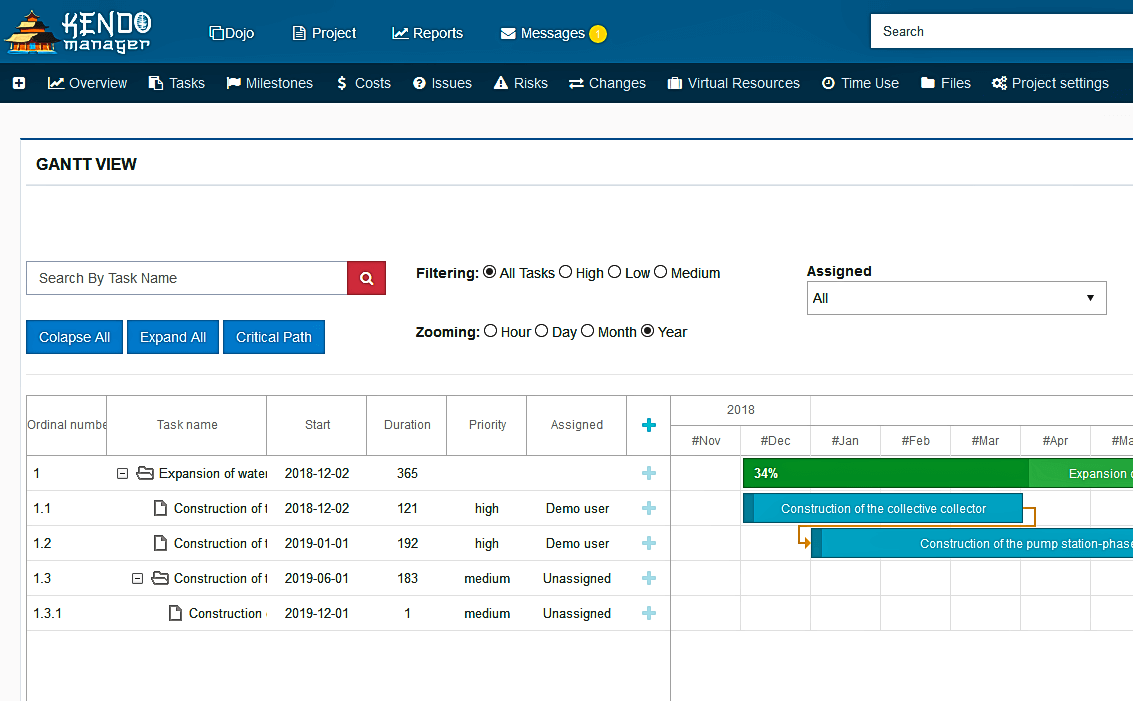
Kendo Manager is designed as a complete on-premise project management solution that directly addresses the compliance and sovereignty needs of the construction industry. By providing a self-hosted platform, Kendo Manager empowers construction firms to:
- Maintain absolute data sovereignty and residency.
- Implement custom security protocols that meet the highest regulatory standards.
- Ensure system reliability and data access even in remote or low-connectivity environments.
Choosing a self-hosted platform is the strategic choice for construction firms that view their data not as a liability, but as a critical, protected asset.
References
- GDPR Compliance for Construction
- Data Sovereignty – Definition and Implications
- CLOUD Act and Data Sovereignty
Frequently Asked Questions (FAQ)
Q1: What is the difference between Data Sovereignty and Data Residency?
Data Residency refers to the physical location where data is stored.
Data Sovereignty, however, refers to the legal jurisdiction and control over the data, meaning the data is subject to the laws of the nation where it is collected or stored. For construction firms, sovereignty is more critical as it dictates legal access and compliance.
Q2: Why is on-premise project management better for GDPR compliance in construction?
On-premise (self-hosted) project management software simplifies GDPR compliance by removing the external Data Processor (the cloud vendor). The construction firm retains full control over access logs, security protocols, and the “Right to Erasure,” which is often the only way to guarantee full compliance and avoid significant penalties.
Q3: How does the U.S. CLOUD Act affect construction data stored in the cloud?
The U.S. CLOUD Act allows U.S.-based cloud providers to be compelled by U.S. authorities to hand over data, regardless of where that data is physically stored globally. This creates a significant data sovereignty risk for construction firms, especially those handling sensitive intellectual property or operating under strict foreign regulations.
Q4: Does Kendo Manager support data sovereignty for construction projects?
Yes. Kendo Manager is an on-premise (self-hosted) project management solution. By installing and running the software on their own servers, construction firms maintain absolute data sovereignty and residency, ensuring their data remains within their physical and legal control.

