
Secure Your Data and Projects: Choosing Self-hosted Project Management Software for Construction Companies

What is the “Self-hosted” Advantage for Construction
While cloud solutions offer convenience, the nature of construction projects—which are often long-term, involve high-value contracts, and require strict adherence to local regulations—necessitates a different approach to data management. This is where self-hosted project management software shines, providing a robust framework for managing every phase of a project lifecycle.
Data Sovereignty and Security: The On-Premise Imperative
For construction companies, data security is not merely a technical concern; it is a legal and competitive necessity. Storing project data on a third-party cloud server introduces inherent risks related to data jurisdiction and compliance.
Self-hosted project management software resolves this by ensuring full data sovereignty, meaning the company retains complete control over where its data resides and who can access it. This is particularly vital for firms operating under strict regulatory frameworks like GDPR or those handling government contracts. By hosting the solution on their own servers, construction firms can implement their own rigorous security protocols, often exceeding the baseline offered by public cloud providers.
Customization and Integration with Existing Systems
The modern construction site relies on a complex ecosystem of specialized software, including BIM tools, specialized accounting platforms, and ERP systems. Seamless integration between the project management solution and these specialized tools is non-negotiable.
A key benefit of on-premise project management solutions is the flexibility they offer for deep, custom integration. Unlike rigid cloud platforms, a self-hosted environment allows IT teams to tailor the software’s API access and database structure to achieve perfect synergy with existing construction technology stacks. This level of customization ensures that data flows smoothly from the design phase (BIM) through execution (project management) to finance (ERP).
Offline Access and Remote Site Reliability
Construction sites are rarely located in areas with perfect, high-speed internet connectivity. Project managers, foremen, and on-site teams need constant access to schedules, task lists, and documents, regardless of network availability.
Self-hosted project management software for construction companies can be configured to allow local network access, ensuring that critical project data remains available even if the internet connection is intermittent or completely down. This system reliability is crucial for maintaining the project’s critical path and preventing costly delays.
Essential Features of Construction Project Management Software
The best self-hosted project management software must offer a feature set specifically tailored to the unique demands of the construction sector, moving beyond generic task management.
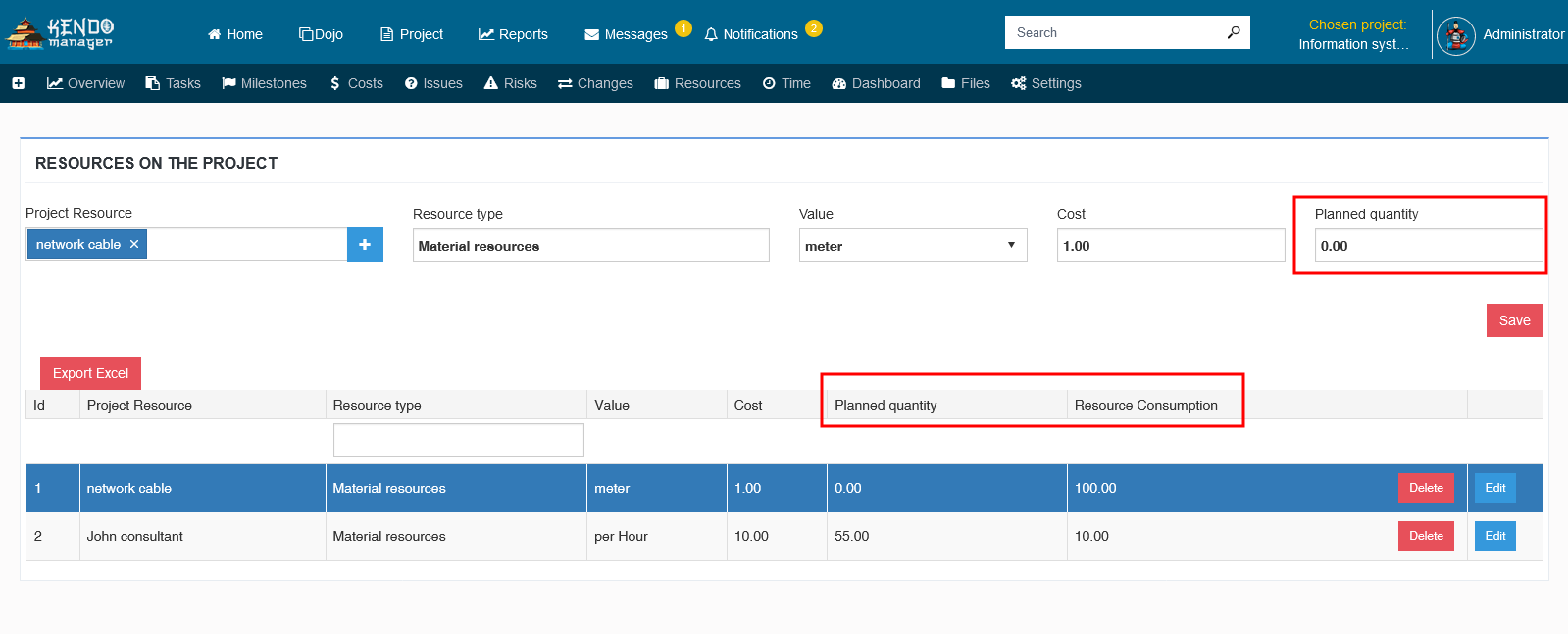
Advanced Resource and Cost Management
Construction projects are defined by their resources: labor, materials, and heavy equipment. Effective cost control and resource allocation are the primary determinants of profitability.
A specialized solution must provide robust tools for:
- Real-time Cost Tracking:
Monitoring actual expenditure against the planned budget, flagging variances immediately. - Resource Management:
Assigning and tracking the utilization of personnel and equipment across multiple projects. - Bill of Materials (BOM) Integration:
Linking project tasks directly to material requirements and procurement schedules.
Visual Scheduling and Task Management
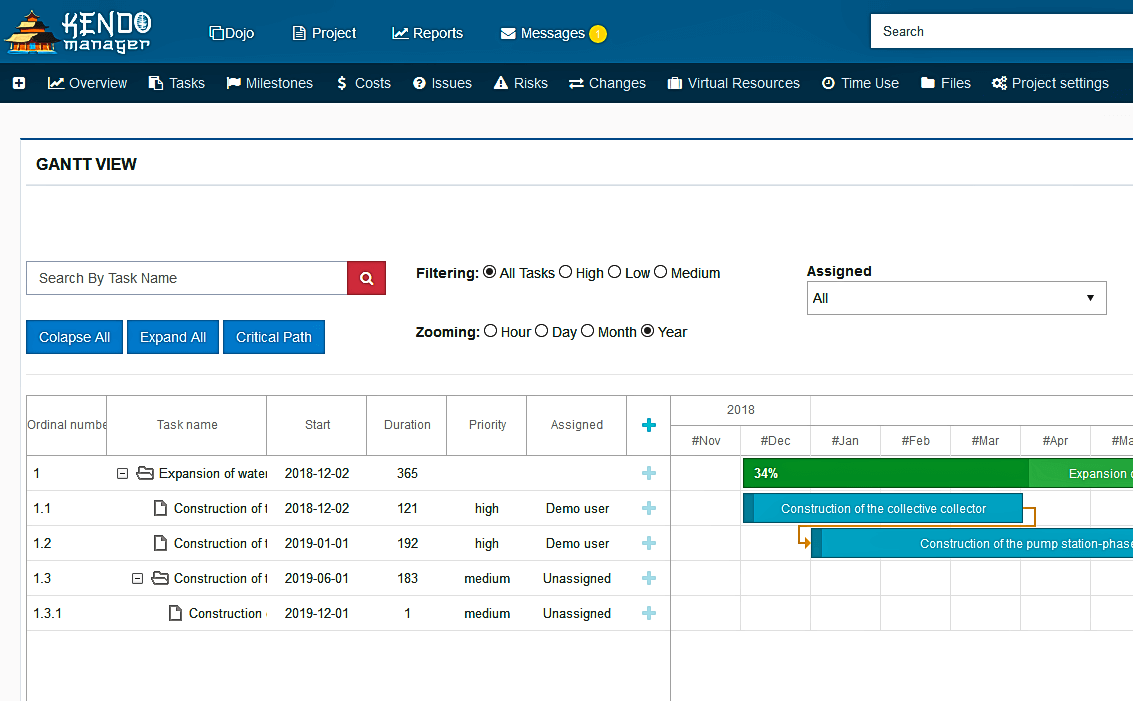
Construction timelines are complex, with tasks often having strict dependencies. The ability to visualize the entire project schedule is paramount.
- Gantt Charts:
These are essential for visualizing the project timeline, identifying the critical path, and managing task dependencies. A self-hosted solution should offer interactive Gantt charts that update in real-time. - Kanban Boards:
Useful for managing smaller, iterative tasks within a larger project, such as submittals, inspections, or punch lists.
Document Control and Versioning
Managing the sheer volume of documents—from initial permits and contracts to daily logs and final closeout documents—is a major challenge. The on-premise project management solution must serve as a centralized, secure repository with immutable version control. This ensures that all stakeholders are working from the latest approved set of drawings and specifications, minimizing errors and legal exposure.
Kendo Manager: The Premier Self-hosted Solution for Construction
Kendo Manager is specifically designed to meet the rigorous demands of the construction industry. As a complete self-hosted project management software, it provides the security and control that modern construction companies require, without sacrificing the powerful features needed for complex project execution.
By choosing Kendo Manager, you gain:
- Complete Data Ownership:
Your data remains on your servers, fully compliant with your internal security and regulatory standards. - Integrated Feature Set:
Robust tools for Cost Management, Resource Management, internal features, and interactive Gantt Charts are built in, addressing the core needs of construction project execution. - Scalability:
The solution scales with your business, allowing you to manage an unlimited number of projects and users without being constrained by a vendor’s cloud pricing tiers.
Self-hosted project management for full control
For construction companies prioritizing data security, compliance, and deep system integration, the decision is clear:
self-hosted project management software is the optimal choice. It provides the necessary foundation of control and reliability that cloud-based solutions simply cannot match in this specialized sector. By adopting a powerful, on-premise solution like Kendo Manager , construction firms can secure their most valuable assets while driving project efficiency and profitability.
Frequently Asked Questions (FAQ)
Q1: What is the difference between cloud and self-hosted project management software?
Self-hosted project management software (also known as on-premise) is installed and run on a company’s own servers, giving them complete control over the data, security, and customization. Cloud-based software is hosted by the vendor and accessed via the internet, offering convenience but less control over data sovereignty and system integration. For construction companies with sensitive data and complex integration needs, self-hosted solutions like Kendo Manager are often preferred.
Q2: Is self-hosted project management software more secure for construction data?
Yes, in terms of control and data sovereignty. While cloud providers offer strong security, self-hosted project management software allows the construction company to apply its own, often more stringent, security protocols, firewalls, and access controls directly to the data. This is crucial for compliance with regulations like GDPR and for protecting proprietary project information, blueprints, and financial records.
Q3: What are the minimum IT requirements for running an on-premise project management solution?
The minimum requirements vary by vendor, but generally include a dedicated server (physical or virtual), a compatible operating system (often Linux or Windows Server), a database system (like MySQL or PostgreSQL), and sufficient RAM and processing power to handle the expected number of users. The benefit of an on-premise project management solution is that the company’s IT team can scale these resources precisely to their needs.
Q4: How does Kendo Manager support construction-specific needs like resource and cost tracking?
Kendo Manager is designed with construction in mind, offering specialized features that go beyond generic task management. It provides robust Resource Management to track labor, equipment, and materials, and advanced Cost Management tools to monitor actual costs against budget in real time. Furthermore, its interactive Gantt Charts are essential for managing the complex timelines and dependencies typical of construction projects.

